


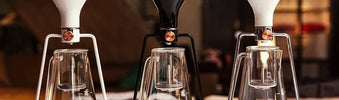
There are many different ways to brew coffee. What's the best way to brew coffee? Of course, this is a matter of taste. And there's no accounting for taste.
In short, there are three brewing methods: espresso beans, fresh brew, and instant. Based on your personal preference, your favorite specialty coffee, and plenty of tasting, you'll determine the best coffee for you and which brewing method suits you best.
Below we'll delve deeper into a current trend among coffee lovers: Slow Coffee.
What is Slow Coffee?
As the term suggests, it's a brewing technique that takes a little longer than, for example, espresso from an espresso machine or coffee from a semi-automatic machine. Brewing a cup of slow coffee takes about 3 to 5 minutes. Because of the longer brewing time, this technique extracts more flavour and aroma from the ground coffee.
Slow coffee is essentially an old-fashioned, well-known concept with a new twist. The setup isn't very different from the familiar filter coffee maker, but the result is much more dimensional, captivating the true coffee lover. Within the slow coffee brewing method, there are several brewing methods: Pour Over, Cold Drip, and Immersion. We'll explore these brewing methods in more detail later in this article.
Slow coffee brewing method
Why choose slow coffee?
Besides the coffee experience for coffee lovers, the slow coffee brewing method delivers a true taste experience. Small adjustments to the brewing method—such as pouring speed, water temperature, and drip time—have a significant impact on the coffee's flavour. The control over the final result—and thus the ability to create your own unique coffee recipe—makes this brewing method a favorite among many coffee lovers.
What should you pay attention to?
- Never use boiling water: This will burn the ground coffee and release too much bitterness and acidity. The ideal water temperature is between 90 and 95 degrees Celsius, or around 80 degrees Celsius for a milder coffee flavour.
- Keep your filter holder clean: You can easily rinse the filter holder clean with a little soapy water and warm water.
- Wet the filter: Rinse the filter before use. This prevents a papery taste in the coffee.
- Correct grind: The correct grind for slow brew coffee is medium to coarse, depending on the slow brewing technique. Grinding should be done shortly before brewing to preserve as much aroma and flavour as possible.
- Coffee-to-water ratio: This ratio obviously has a major impact on the final result. It varies by method and recipe.
- The blooming process: After placing the ground coffee in the wet filter, pour a little hot (not boiling) water over it with a circular motion until all the coffee is wet. This degasses the coffee. Once the coffee stops blooming, the process is complete; this takes about 30 seconds.
Pour Over Brewing Method – Pure Coffee Experience
The wet filter is filled with ground coffee, and hot (not boiling) water is poured over it. Because the water isn't boiling and flows through at a lower pressure (and therefore more slowly), it extracts all the flavours and aromas from the ground coffee.
After the blooming process, slowly pour the remaining water over the coffee using a circular motion. Gently swirl and move the coffee maker back and forth to ensure all the coffee particles are thoroughly infused. The coffee will flow directly into the pot. The result: a delicious, pure cup of coffee.
Pour-over brewing methods refer to all hand-brewing techniques where you slowly pour water over the ground coffee while the coffee flows through to the pot.
Immersion Coffee – Full & Powerful
With immersion brewing, the same water remains in contact with the coffee for a long time. The water's extraction capacity gradually decreases, causing it to gradually absorb fewer notes. Both the water and coffee remain in the filter throughout the extraction process. Because the coffee extraction gradually decreases, the final coffee is somewhat milder and less strong-flavoured than with, for example, a drip method. After the extraction time is complete, you open the valve and the coffee flows into the carafe. Immersion brewing methods include the Gina Smart, French press, siphon, and Aeropress.
Cold Drip – wonderfully cooling
The cold drip method is used as a cold brew method. This method allows you to make cold coffee, also known as Dutch coffee. Because the ground coffee isn't heated, all the aromas and flavours of the bean are preserved. For this method, choose a coffee with a roast that isn't too dark. As the (ice) water slowly drips through the grounds, it extracts all the flavours and aromas, resulting in an iced coffee with a full body and a robust taste.
Drip brewing methods include the Gina Smart, the V60, Chemex, Kalita and the Beehive.
Which coffee beans should you use?
Not all coffee types are suitable for slow coffee. Coffees with a fresher, fruitier character are best. We recommend purchasing a coffee grinder to freshly grind your coffee beans, but you can also have your coffee beans ground at one of our locations or when ordering online.
Our Traditional Ethiopian Coffee, the Bright Colourful Guatemala and the Brazilian Special Mild are coffee varieties that are suitable for the Slow Brew method.
Which filter should I use for Cold Brew?
Special filters are available, but a standard paper coffee filter is also suitable for the slow brew method. When using a paper filter, we recommend pre-rinsing it first. With the purchase of the Gina Smart, you'll receive a free set of filters.
Personal advice
You're very welcome at our Kaldi locations . Our staff will be happy to advise you on the various brewing methods, the best coffee bean for each, and of course, you can sample our coffees.
Other blog posts
-

Why the freshest roast date doesn't always result in the tastiest coffee
Why the freshest roast date doesn't always result in the tastiest coffee -

-


