


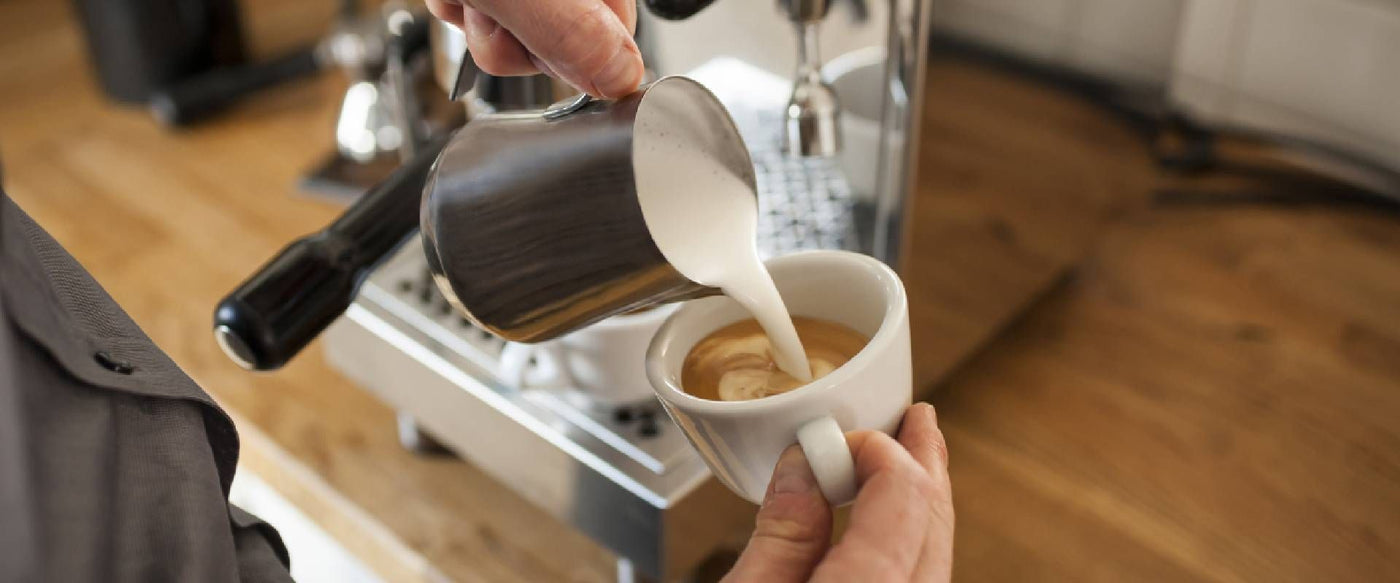
Most coffee lovers among us enjoy a well-made espresso, cappuccino, or lungo every day, right at home. But a home machine works a little differently than one in a professional coffee shop. It's a bit more challenging to make just one or two perfect coffees, rather than a large number.
Below are some tips for achieving the same results at home as in the coffee shop. Sometimes you'll need additional tools to achieve these professional results.
Tips for coffee
Coffee can be brewed in various ways to create the desired flavor. Below are the most important tips for enjoying a cup of coffee at home.
Flow time and strength of your espresso
To prepare a well-flavored espresso, it's important that it brews long enough. With a fully automatic coffee machine, you can adjust the espresso only to a limited extent, except for the strength, and the grind setting is often limited. The strength of one, two, or three beans depends on the amount of ground coffee. This has little to do with a stronger flavor, but more to do with the mouthfeel. The coffee will be slightly more watery or slightly more syrupy. The grind size has more to do with the brew time. The longer the brew time, the more bitter your coffee will taste. The finer you set the grind, the longer the brew time. After all, water flows more slowly through sand than through marbles.
Keep your portafilter warm
Don't store the portafilter next to your machine, but inside the brewing unit to keep it warm so your espresso doesn't cool down too much while brewing. You can also make a shot without coffee and dry the filter thoroughly to warm it. Just be sure to clean the portafilter before putting it back in the machine.
The right amount of coffee
To ensure consistent espresso, it's important to always use the same amount of coffee. If you have a grind-on-demand grinder and it's set correctly, you'll always get the same amount of coffee out of it. If you make a small number of coffees at home, you're better off with a smaller grinder where you weigh the coffee yourself.
A filter holds about eight grams of coffee per cup, or about sixteen grams for two cups. You can weigh the coffee beans before adding them to your grinder. If you weigh sixteen grams of coffee beans and grind them, you can assume you also have sixteen grams of ground coffee. If you do this, collect the ground coffee in a larger container.
Place your filter holder on a scale and fill it to the desired amount before adding it to the filter and tamping (pressing) it. You can use a teaspoon to scoop or add a small amount of coffee from the filter.
Once you've made the espresso, you can tell by the coffee puck whether you've used the correct amount of ground coffee. If your puck is very wet, you're not using enough coffee and it's wise to add more next time. If the coffee puck is too dry, you're using too much coffee. If the puck feels moist and firm, the amount is correct.
Adjust the amount and grind after brewing. If the coffee is brewing too long, grind coarser. If the coffee is brewing too quickly, grind slightly finer.
Froth a small amount of milk
It's easier to use cold milk and a cold pitcher for frothing. This gives you enough time to blow warm air into the milk to create a nice, thick layer of foam before the milk gets too hot. Use a thermometer to ensure the milk doesn't boil. Don't fill the pitcher more than one-third full with cold milk. Frothed milk will roughly double in volume when properly frothed.
When your espresso machine cools, steam from the boiler condenses in the steam wand. When you froth milk, water first comes out of the steam wand. To avoid diluting the milk with water, hold a cloth over the wand for protection and blow out the steam wand before frothing.
Work efficiently
The best baristas know in advance what they need and when they need it. Make things easy on yourself and keep all your tools nearby. A tidy coffee station looks neat and tidy, allowing you to focus on the coffee. Wipes are also very important to have on hand. To prevent cross-contamination, use a dry wipe to wipe your portafilter and a damp cloth to keep the machine and work area clean. Use a separate damp cloth only to wipe the steam wand. Keep the wipes separate by using different colors, for example.
Keep it clean
It's easy to skip cleaning your coffee machine when you've only made one or two espressos. If you make coffee later and the old coffee residue is still on the group head, not only will the residue be harder to remove, but the flavor of your freshly brewed coffee will also be less pleasant. Clean your machine regularly and make sure it's clean after use. This way, you can be sure you're always getting the best possible coffee.
View coffee beans
-

€33,95
-

€36,50
-

€31,95
-

€49,95
-

€20,00


Other blog posts
-

Why the freshest roast date doesn't always result in the tastiest coffee
Why the freshest roast date doesn't always result in the tastiest coffee -

-


